
What we believe in
Every context is different. Every person unique. That diversity isn’t noise: it’s the signal that tells you what to actually build.
Our mission
Helping product leaders build what people actually need.
Our mission is to help product leaders build what people actually need, in a world where those needs are changing fast. The only way to know what’s worth building is to go where people actually live and work. Not labs. Not reports. The real world holds the signal that no desk research can replicate.
Most teams don’t do this, not because they don’t care, but because controlled environments feel safer. Workshops, decks, and demos keep assumptions comfortable and unchallenged. We believe that’s exactly where the risk hides.
As such, we champion radical empiricism: the belief that witnessing reality transforms understanding in ways traditional reports never can. Every context teaches. Every contradiction clarifies. Every person’s unique reality reveals what no amount of desk research can.

A Yemen dish, from the project “Making food detection systems inclusive of global audiences.”
“Great products don’t start from technology. They start from understanding what people actually need.”
Why a studio
Agile by design. Close to the craft.
As a studio, we move fast and stay close to the craft. We bring together deep expertise in human-centered design and design research without the overhead of traditional consultancies. Every project gets the focus and quality it deserves: no cookie-cutter frameworks, no bloated timelines.
We work alongside your team as an extension of your thinking: part advisor, part devil’s advocate. You remain in the driver’s seat of your innovation; we bring the external perspective and field intelligence you need to navigate it wisely.
We’re here to challenge assumptions when they need challenging, surface insights your internal team can’t see from inside, and bring back evidence that helps you make confident decisions.
The name
BestGoed
A name that only makes sense in context.
“Best goed” reflects Belgian culture at its finest. Here, we don’t say something is really good, we downplay it, even if it is really good. Instead, we say it’s “best goed”: kind of good.
Hard to truly understand outside of Belgian culture and to pronounce, it represents our belief that cultural nuances and contexts are essential to AI. After all, you don’t want your audience to ‘mispronounce’ your AI, so to speak.
And hey, if that doesn’t convince you: we feel the name is still best goed.
Pronunciation: say “best” + “good” in English, but don’t use your throat for the g. Or send us a message to hear how we say it.
 –>
–>The team
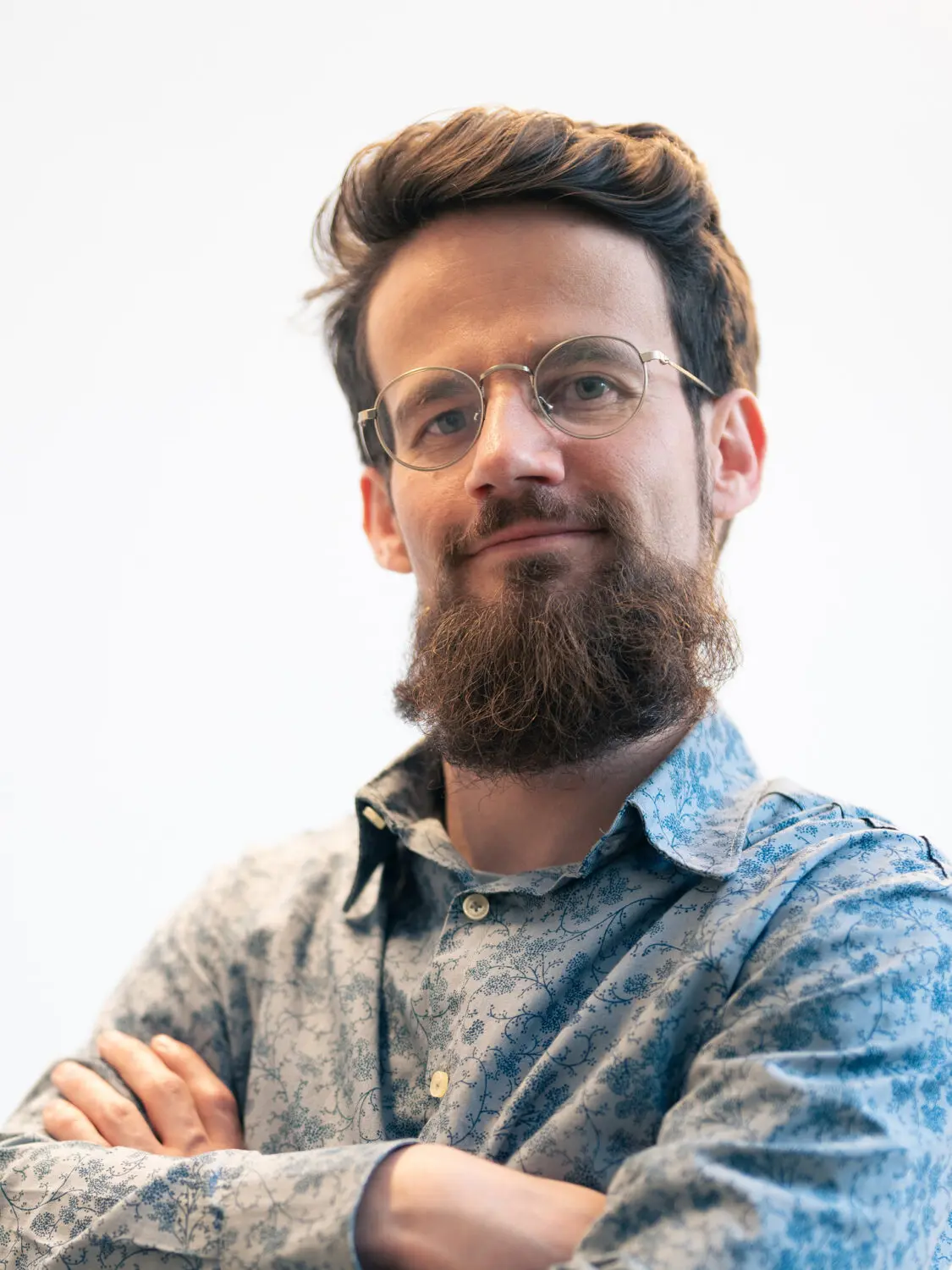
Niels Quinten
PhD · Founder
With extensive experience leading a wide variety of AI projects and developing tools to make AI more accessible for SMEs, Niels offers a highly practical perspective on AI development. Combining this with a PhD on human-centered design of technology, as well as extensive cultural exploration, Niels bridges the worlds of technology and human complexity to advocate for AI that has real impact in the real world.
We love AI, people, and the messy space in between.
Got a project? We get excited about getting AI adopted by a wide variety of audiences. Let’s talk.